What You Need to Know First

Bajos del Toro is a small village in the mountains north of Costa Rica's Central Valley, sitting between two national parks in a permanent cloud forest. Waterfalls are the main attraction here, and there are a lot of them.
Two things are worth knowing before booking. By Costa Rican standards, this is a cool and wet place. Temperatures run from the late 50s to the mid 70s Fahrenheit, and it rains to some degree during every month of the year, which is what keeps the forest thick and the rivers full. It is also genuinely small, with one grocery store, a handful of restaurants, and a soccer field at the center. The road into Bajos del Toro is paved but steep, narrow, and frequently inside a cloud. If you love immersing yourself into a new destination like this, it’ll be your perfect fit.
Quick Facts
- Best time to visit: November–May for the driest trail conditions, though rain is possible in any month.
- How to get there: Around 2 hours driving from the nearest airport.
- Days needed: 2–3 days.
- Budget: $110–$850+ per day depending on accommodations and activities.
- Primary activity: Waterfall hikes and cloud forest walks.
- Difficulty level: Moderate. Several of the waterfall hikes involve long, steep stair descents.
About Bajos del Toro
The full name of this area is actually Bajos del Toro Amarillo, literally translating to “the yellow bull's lowlands”. Toro Amarillo is the name of a local river. Local folklore holds that cattle farmers passing through decades ago left behind a large yellow bull that nobody in the valley could ever manage to catch or tame. It roamed the fields along the river, the river took its name, and in time so did the village.
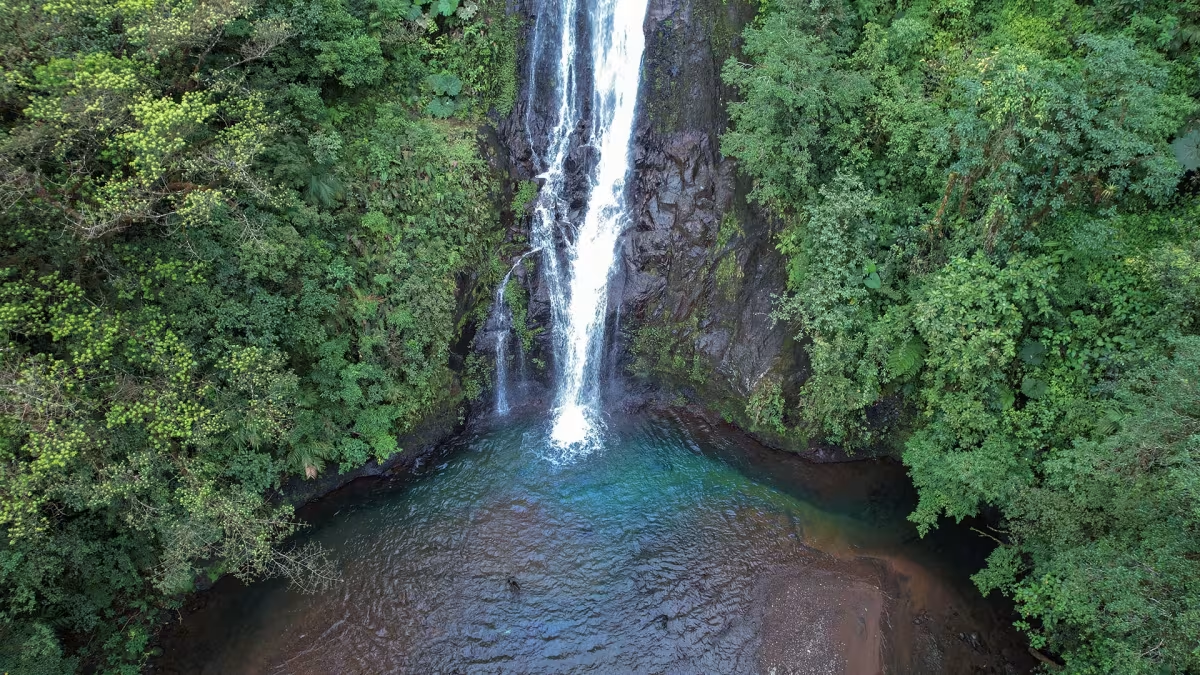
The setting is highland cloud forest in the Alajuela province, wedged between the rarely visited northern side of Poás Volcano National Park and the little-known Juan Castro Blanco National Park. Underground volcanic activity on either side of the valley turns stretches of the Toro Amarillo and several of its waterfalls into a strong blue and turquoise hue, a similar effect to the one that colors Río Celeste further north.
Farming still runs the valley, with vegetable crops, ornamental plants, and small cattle operations alongside hydroelectric stations on the rivers. Tourism arrived late and remains a modest part of local life. For the discerning traveler, this means a more authentic experience to everyday Costa Rica, from both a natural and cultural perspective.
Bajos del Toro Key Stats
- Elevation/geography: Highland cloud forest valley at roughly 4,593 feet, between two volcanic national parks.
- Closest major city: San José.
- Airport distance: Around 30 miles (49 km) from Juan Santamaría International Airport (SJO), about two hours by road.
- Unique features: A dense concentration of waterfalls, interesting geography, and river sections that run bright blue from volcanic minerals.
Who Is Bajos del Toro Best for?

The valley suits travelers who want cloud forest and waterfalls and who don't mind trading comfort and convenience for quiet.
- Waterfall enthusiasts. Several large falls sit within a short drive of each other, including one that drops around 300 feet into an extinct volcanic crater. This is the densest concentration of big waterfalls anywhere in Costa Rica.
- Birdwatchers. The valley sits in unbroken cloud forest between two national parks, with quetzals, toucans, and hummingbirds among the regular sightings. Some private reserves are set up specifically for birding!
- Remote travelers. Since this is an area without a lot of tourism movement, it’s convenient and ideal for travelers who want a secluded feel during their stay.
- Passersby. Because of its proximity to the airport, the valley works as a first or last stop in the country without committing to a long transfer.
- Hikers who would rather avoid the heat. Temperatures rarely climb above the mid 70s Fahrenheit, which makes hiking considerably easier than it is in the lowlands.
Pros and Cons
These are the potential perks and drawbacks of staying in Bajos del Toro. Make sure to take these into account before you book!
Pros
- Nature galore. With plenty of waterfalls, hiking trails, forests to explore, and wildlife to spot, Bajos del Toro is particularly good if you want to experience the inland plants and animals of Costa Rica.
- The cloud forest for yourself. Monteverde, Costa Rica's best-known cloud forest, receives heavy visitor traffic while Bajos del Toro has the same ecosystem and a tiny fraction of the people.
- Convenient location. It’s close to the airport, national parks, wildlife sanctuaries, and halfway between the city and bigger destinations.
- A working valley rather than a tourism town. The ambiance is peaceful and genuine, it feels as if Costa Rica is less disturbed here.
Cons
- It rains all year. Even the drier months see rain. Trails stay muddy, and views appear and disappear with the clouds.
- The roads are tricky. Paved, but steep, narrow, and frequently with poor visibility. It isn't a drive to attempt after dark.
- Small village offerings. A downside if you don’t like the vibe. It’s basically one grocery store, a few simple restaurants, and a pizza place. Also few tour operators, which means you reach most attractions under your own steam.
- The waterfall hikes are demanding. Long, steep stair descents are the norm, and everything you walk down you have to climb back up.
How Bajos del Toro Compares with Other Nature Destinations
Costa Rica has several highland cloud forest destinations, and a handful with unusually-colored water. Bajos del Toro sits in both categories, which puts it alongside Monteverde on one hand and Río Celeste on the other.
Bajos del Toro vs Monteverde

The two share an ecosystem. Both are highland cloud forests, both are cool and damp, and both are known for birdlife. Which is the one for you? It all comes down to certain key differences.
Monteverde is Costa Rica's most famous cloud forest destination and has the infrastructure to match: a reserve system with paid entry and guides, hanging bridges, ziplines, and a cluster of hotels, restaurants, and tour desks in nearby Santa Elena. It is easy to fill several days there.
Bajos del Toro has the same forest and almost none of the infrastructure. There is no tour operator scene, few restaurants, and a good chance of having a trail to yourself. Waterfalls are the focus rather than canopy platforms.
Choose Monteverde for organized tours, guides, and a town to base yourself in. Choose Bajos del Toro if you would rather the forest were quiet and you want this sense of deep exploration.
Bajos del Toro vs Río Celeste

Both destinations have rivers with waters that turn a startling blue from volcanic minerals, and both sit in remote inland areas with limited services. However, they are very different experiences.
At Río Celeste the color is concentrated in one place, inside Tenorio Volcano National Park, where two clear streams meet and turn turquoise. The park limits daily entry, the route is one well-marked trail, and the setting is warm lowland rainforest.
In Bajos del Toro the blue appears along stretches of the Toro Amarillo rather than at one spot, and the draw is the number and scale of the waterfalls rather than a single sight. It is also considerably cooler than the rainforest.
Choose Río Celeste for one of the country's most photographed natural sights on a straightforward trail. Choose Bajos del Toro for more waterfalls, cooler air, and more challenging hiking.
When to Visit Bajos del Toro

Rain falls pretty much every month in Bajos del Toro, but the two ends of the year are markedly different. For example, January is drier and cooler, with clear spells and firm trails underfoot. Meanwhile, October brings rain most days and clouds that sit in the valley for hours.
However, the more useful question is when in the day you explore the area. The Blue Falls, one of the most sought-after sights, need around twelve hours without rain before they can open, so a wet afternoon can close them at short notice. Mornings are consistently the safer bet, and Catarata del Toro stays open regardless of the weather.
High Season (December–April): The Drier Months
- Weather: The driest stretch of the year, but afternoon rain is still likely. Even though it’s the “dry” season and therefore the hottest, temperatures stick to the late 50s to the mid 70s Fahrenheit.
- Crowds: Busiest of the year, though that means dozens of people rather than hundreds. Christmas, New Year, and Easter are the peaks in the holiday season.
- Pricing: Highest rates at the lodges.
- Waterfall flow: Lower than in the rainy months, but the water runs clearer, which shows the blue at its best.
- Trail conditions: Firmer underfoot, and the long stair descents are less slippery.
- Best for: Reliable access to the Blue Falls and the clearest views across the valley.
Low Season (May–November): The Rainy Season
- Weather: Rain most afternoons, with September and October seeing heaviest rains.
- Crowds: Very low.
- Pricing: Lowest rates and the best availability.
- Waterfall flow: At its strongest, and Catarata del Toro at its most dramatic.
- Trail conditions: Muddy and slippery, and cloud settles into the valley for longer stretches.
- Access: The Blue Falls close after recent rain, so build a spare morning into your plans. Catarata del Toro is unaffected.
- Best for: Waterfall volume, empty trails, and the lowest rates of the year.
Shoulder Seasons (May, November)
- Advantages: Lower rates, few other visitors, and strong waterfall flow without the heaviest rainfall.
- Disadvantages: Weather is unpredictable, and closures at the Blue Falls become more likely.
Month-by-Month Breakdown
| Month | Weather | Waterfall Flow | Best For |
| Jan | Drier, cool | Moderate | Clearest blue water |
| Feb | Driest of the year | Moderate | Firmest trails |
| Mar | Dry, mild | Lower | Reliable access to all falls |
| Apr | Rains returning | Rising | Fewer visitors, good flow |
| May | Wet | Strong | Value and strong falls |
| Jun | Wet | Strong | Quiet trails |
| Jul | Wet, brief clear spells | Strong | Lush forest |
| Aug | Wet | Strong | Fewest visitors |
| Sep | Wettest | Highest | Waterfall volume |
| Oct | Wettest | Highest | Lowest prices |
| Nov | Rains easing | Strong | Shoulder season value |
| Dec | Drier by mid-month | Moderate | Start of the drier season |
How to Get to Bajos del Toro

Bajos del Toro’s location is an adventure in itself. In spite of its closeness to major cities and tourist hubs, it feels pretty remote. It’s a sort of “in-between” place, perfect if you want a hidden getaway in the mountains. And if you’re continuing to La Fortuna and Arenal Volcano afterward, it’s roughly 1.5 hours North, adding to the convenience. All this is part of the reason why travelers–especially couples and nature enthusiasts–are attracted to the area.
From San José
Most visitors will go to Bajos del Toro straight out of the airport. The Juan Santamaría (SJO) is just outside San José and is the closest international airport. The village is only around 31 miles away, but the drive takes about two hours because almost all of it is on mountain roads.
There are three routes in, by way of Sarchí, Zarcero, or Río Cuarto. The main approaches are paved, but all of them climb steeply, narrow in places, and pass through clouds. Also, surfaces often deteriorate on the smaller roads leading to the lodges and waterfalls.
Private Transfer
- Duration: Around 2 hours.
- Cost: Approximately $180–$250 per vehicle depending on group size.
- Best for: Travelers who want convenient transportation along with the expertise of professionals. It’s the way we recommend you make the trip!
- Pros: A driver who knows the route in cloud and rain, door-to-door service, and no navigation to worry about.
- Cons: The most expensive option for solo travelers.
- Booking: All Costa Rica Vacations packages include airport meet-and-greet service and private transfers with English-speaking drivers.
Rental Car / Driving Yourself
- Duration: Around 2 hours.
- Cost: $70–$120 per day for a 4x4, since it gives you the clearance and grip necessary for the type of roads.
- Best for: Travelers who want to reach the waterfalls on their own schedule, since the valley has few tour operators.
- Pros: The waterfalls, reserves, and restaurants are spread along the valley road, and a car is a practical way to move between them.
- Cons: The climb from the south is steep and narrow with poor visibility in cloud, and potholes and uneven surfaces are common. Drive in daylight only, and download maps before you leave, as phone signal is thin.
Public Bus
- Duration: 3–4 hours, including connections.
- Cost: Approximately $5–$15 per person.
- Best for: Budget travelers with time and flexibility.
- Pros: Very cheap, and the route passes through Sarchí, which is worth a stop in its own right.
- Cons: Buses through Bajos del Toro are few and far between, and once you arrive there is almost no local transport to reach the waterfalls.
Getting Around Bajos del Toro
The village center is small enough to cover on foot, but the waterfalls, reserves, and most of the lodges sit spread along the valley road rather than clustered together. Taxis are uncommon and there are few tour operators, so visitors either drive or arrange transport through their lodge. Phone signals drop off quickly outside the center, so it is worth downloading maps for offline use before setting out.
Where to Stay in Bajos del Toro

Accommodation in Bajos del Toro is limited but genuinely varied, ranging from one of Costa Rica's best-known eco-lodges down to family-run cabins a short walk from the village center. There are no resorts and no chain hotels.
Two things apply at every price level. First, nowhere has air conditioning, because nowhere needs it, and most places provide heaters, extra blankets, or both for the cool nights. Second, properties are spread along the valley road rather than clustered, so it is worth checking how far yours sits from the waterfalls and the village.
Upscale Hotels: $300+ per night
El Silencio Lodge and Spa
- Location advantage: Set on its own 500-acre private cloud forest reserve, with rivers, waterfalls, and hiking trails on the property itself.
- Amenities: Sixteen freestanding villas with private outdoor heated jacuzzis, decks with rocking chairs, and electric heaters. Esencia Spa, an open-air yoga deck, a fire pit, and the Las Ventanas restaurant, which grows most of its vegetables in an on-site greenhouse. Ziplining, horseback riding, and archery are arranged on site.
- Cost per night: From $675 per night.
- Good for: Couples, wellness travelers, and anyone who wants the valley's scenery without leaving the property.
- What to know before booking: There are no TVs and no restaurants within reach, so meals are taken at the lodge.
Mid-Range Hotels: $100–$300 per night
Blue Morpho Lodge & Spa
- Location advantage: In the village itself, within a few minutes of the blue waterfalls and walkable to the restaurants and grocery store.
- Amenities: Spacious cabins with enclosed porches and coffee provided, breakfast included, plus a simple sauna and jacuzzi. Gardens full of birds and butterflies.
- Cost per night: From $160 per night.
- Good for: Travelers who want comfort and easy waterfall access.
- What to know before booking: English is limited, which some guests find frustrating.
Bosque de Paz
- Location advantage: A private biological reserve in the Río Toro valley, roughly 14 km from Zarcero, with miles of private trails and its own waterfalls.
- Amenities: Twelve rooms with all meals included, an orchid garden, and hummingbird feeders in constant use.
- Cost per night: From around $120 per person per night, including meals.
- Good for: Birdwatchers and hikers.
- What to know before booking: This is a research reserve that takes guests rather than a hotel with trails attached.
Budget Hotels: Under $100 per night
Selvática del Toro
- Location advantage: A five-minute walk from the village shops and restaurants, and a short drive from both Catarata del Toro and the Blue Falls.
- Amenities: Five detached, fully equipped cabins with kitchens, hot water, blankets, and private parking. Studios sleep two, larger cabins sleep four.
- Cost per night: From $60 per night.
- Good for: Self-caterers, couples, and small families who want space and independence and don’t mind simple furnishings.
Booking Tips for Lodging in Bajos del Toro
- Book in advance. Inventory is small, so the high season months (roughly from December to April) fill months ahead. To make sure you get what you want, book as early as possible.
- Check what is included before booking. Breakfast comes with most properties, but Bajos del Toro has few restaurants and they close early, so a meal plan is often more practical than it looks.
- Ask about heating rather than air conditioning. Nights are genuinely cold at this altitude, and the properties that handle it well provide heaters and heavier bedding as standard.
What to Do in Bajos del Toro

Bajos del Toro is particularly great for those travelers who want immersive nature experiences and the ability to explore the area at their own pace.
Nature Experiences
Chasing Waterfalls
Two waterfalls account for most visits to this part of Costa Rica. Catarata del Toro drops around 90 meters into an extinct volcanic crater, reached by several hundred steps that take about 90 minutes round trip. The Blue Falls, a short drive away, is a series of smaller falls and pools colored turquoise by volcanic minerals.
Hiking
The valley is really a hiking destination. The Bosque de Paz Nature Reserve has miles of private trail through primary cloud forest, an orchid garden, and hummingbird feeders. Several lodges have their own trails and waterfalls, so a day can pass without leaving the property.
National Parks
Juan Castro Blanco National Park borders the valley and is among the least visited in Costa Rica. La Paz Waterfall Gardens a little over an hour, and the northern side of Poás Volcano National Park is close by, though it closes at short notice when volcanic activity picks up.
Beyond Nature: Adventure and Cultural Activities
Bajos del Toro offers more if you want it, though not to the scale of bigger destinations. For example, you can go rafting on the Toro River, horseback riding, and also trout fishing. Sarchí is a town known for its artisan work and traditional oxcart designs, and it’s only 40 minutes away. If you want some of these experiences it is also possible!
Dining and Food in Bajos del Toro

Bajos del Toro has a handful of restaurants, almost all of them small, local, and inexpensive. Make sure to check opening days before setting out to eat at one of them: several places close for a full day midweek, and only one serves past early evening.
The best option for fine dining in the valley is Las Ventanas at El Silencio Lodge. The quality and taste of the food is one of the reasons why we highly recommend this destination to our clients.
Where to Eat in Bajos del Toro
- Yellow Bull Restaurant: The busiest place in the village, just east of the church, open every day from early morning to early evening. Home cooking, generous casados, and fast service from a small kitchen.
- La Terraza del Café: A cafe and food shop on a terrace looking out over the mountains, open from 6am at weekends. Good coffee, frappes, and the most reliable breakfast in the village.
- Restaurante-Bar Toro Amarillo: Next to the community hall, and the only place serving late into the evening. Casados, homemade salsa, and a locally made spirit called chirrite. Closed Wednesdays.
- Restaurante Blue Morpho: A family-run spot with fruit feeders that pull in oropendolas and other birds while you eat. Cash only, and closed Thursdays.
- Kafecitos: A soda and supermarket combined, useful for stocking up if you have a cabin with a kitchen, and open longer hours than anywhere else.
- Pesca de Truchas Nene: A trout farm where you catch your own fish and they cook it for you. Open Thursday to Sunday only.
Local Specialties to Try
- Whole fried trout: Farmed in the cold rivers throughout the valley and served fried whole with rice and salad. The most genuinely local thing on any menu!
- Coffee: The slopes below the valley are prime coffee country, and it is served strong and fresh everywhere.
- Agua dulce: Hot cane sugar drink, sometimes made with milk, and the local answer to a cold evening. It’s a traditional staple that can amaze with its simplicity and flavor.
Bajos del Toro Budget Breakdown

Bajos del Toro can be done cheaply or expensively with very little in between. However, the difference in the quality of experience is undeniable as well. When visiting, the largest variable after accommodation is whether you rent a vehicle. We often recommend our clients to use transfer services for a truly hassle-free experience, it’s often a better investment for your dollar.
Daily Cost Estimates
These estimates are just to give you an idea of the sort of experience your budget can get you!
Economy ($110–$170/day)
- Accommodation: $60–$80 (village cabins)
- Food: $15–$30 (local restaurants)
- Activities: $15–$25 (waterfall entry)
- Transport: $10–$20 (buses and lifts)
- Miscellaneous: $10–$15
Total: $110–$170
Mid-Range ($250–$400/day)
- Accommodation: $120–$160 (lodges and reserves)
- Food: $30–$50, or included at some locations
- Activities: $25–$50 (waterfall entries, guided walks)
- Transport: $70–$120 (4x4 rental)
- Miscellaneous: $15–$30
Total: $260–$410
Luxury ($850+/day)
- Accommodation: $675+ (El Silencio Lodge and Spa)
- Food: $80–$150 (breakfast included, lunch and dinner on-site)
- Activities: $25–$50
- Transport: $70–$150 (4x4 rental or private transfers)
- Miscellaneous: $30–$50
Total: $880–$1,705
Sample Activity Costs
| Activity | Cost | Notes |
| Catarata del Toro entry | $15 per adult | Closed Sundays |
| Blue Falls entry | $20 per adult | Closed Sundays |
| Combination ticket | $25 adult, $12.50 child | Covers both, takes most of a day |
| Trout fishing with lunch | Around $16 for the fish | You catch it, they cook it |
Money-Saving Tips for Bajos del Toro
- Catarata del Toro and the Blue Falls charge separate entry fees, but a single ticket covering both costs less than paying the two individually.
- Cabins with kitchens cost a fraction of lodge rates, and the village supermarket is a short walk from most of them.
- Bosque de Paz includes all meals in its rate, which is worth comparing against a room-only rate plus three meals out.
- The May-November rainy season brings lower rates and better availability.
- Eating in the village costs a fraction of dining at the lodges.
Safety & Essentials in Bajos del Toro

Since this is a farming village of only a few hundred people, crime is not a meaningful concern. The potential risks you have to watch out for are often environmental: the road in, the rivers, the trails, and the weather.
General Safety
In Bajos del Toro, petty theft is uncommon and violent crime is close to unheard of, making it very safe for both locals and visitors. Common sense measures will ensure you have a hassle-free experience, particularly if you follow the guidelines when exploring the outdoors.
If you are driving, the road is where you have to pay the most attention. It is steep, narrow, unlit, and frequently inside the clouds, and visibility can drop to a few meters without warning. Drive it in daylight, slow down when the cloud closes in, and fill up before the climb, just to be sure.
Weather
Because of the year-round chance of rain in this area, weather is an important factor when exploring Bajos del Toro. This is how it affects the main activities:
- Waterfalls: The waterfall descents are steeper than most in Costa Rica, so make sure you’re well equipped for the journey. Catarata del Toro involves several hundred steps down and the same climb back up, which is worth weighing if you have some kind of mobility issue. River water is also cold and rises fast after rain, so the rocks around the falls stay slick year-round. Swimming beneath waterfalls is where most trouble in this kind of terrain starts.
- Hiking trails: It is easier to lose the path in cloud forest than in open woodland, since visibility closes in and the undergrowth is dense. Stay on marked routes and tell someone where you are going, because the phone signal disappears once you leave the main road. Snake warning signs appear on some trails, though sightings are uncommon, so just make sure you follow the guidelines and you’ll be fine!
Health
- Water safety: Tap water is safe throughout the valley and comes straight off the mountains, though it is worth asking at the smallest rural properties.
- Mosquito precautions: Far less of an issue than in the lowlands, as the altitude keeps numbers low year-round.
- Sun exposure: Cloud cover is deceptive. UV is strong at this altitude even on overcast days, so sunscreen still matters.
- Medical care: There is no hospital in the valley. The nearest facilities are in the Central Valley towns, an hour or more away by mountain road.
- Insurance: Strongly recommended given the remote setting, the mountain road, and the hiking.
Logistics
- Currency: Carry cash. Banking facilities in the village are minimal and some restaurants do not accept cards.
- Language: Spanish is the primary language. English is spoken at El Silencio and some of the lodges, less so in the village.
- WiFi: Available at most lodges and several restaurants, though it drops away entirely on the trails.
- Electricity: Same as the U.S. (110V, Type A/B plugs).
Packing for Bajos del Toro
- Warm layers, especially for the evenings.
- Rain jacket.
- Hiking shoes with good grip.
- Dry bag or waterproof phone case.
- Binoculars for wildlife spotting and birdwatching.
- Camera for all those beautiful sightings.
- Cash for small purchases or tips.
- Reusable water bottle, especially if you plan on going to the national parks.
Best Resources

FAQs about Bajos del Toro
Is Bajos del Toro worth visiting?
Yes, especially if waterfalls and cloud forests are what you came to Costa Rica for. It offers a lush highland ecosystem with very few visitors, and the waterfalls are among the most impressive in the country.
How many days should I spend in Bajos del Toro?
Two or three nights suits most people. That covers both major waterfalls with time left for a hike or a slow morning.
What's the nearest airport to Bajos del Toro?
Juan Santamaría International Airport (SJO), around two hours away through a mountain road.
Do I need a car in Bajos del Toro?
It helps considerably. The waterfalls, reserves, and lodges are spread along the valley road, and taxis are uncommon. This is why on our packages we always make sure to include the transportation you need.
Are the waterfalls open every day?
No. Both Catarata del Toro and the Blue Falls are closed on Sundays, which catches out visitors on weekend trips. They open Monday through Saturday, with the last entry in the late afternoon.
Can you swim at the waterfalls?
At some, yes! There are natural pools at the base of several falls which many find refreshing. Just keep in mind the water comes straight off the mountain and is genuinely cold, and the rocks around the falls stay slippery. Currents can strengthen quickly after rain.
How cold does it get in Bajos del Toro?
By Costa Rican standards, it is cool rather than cold, running from the late 50s to the mid 70s Fahrenheit. Nights need a layer, and few properties have heating beyond blankets.
Is Bajos del Toro good for families?
It’s a destination that works best if you travel with older children. The waterfall trails usually involve a lot of steps and steep terrain, so it’s great for active and adventurous kids. The village cabins with kitchens work well for families and the valley is very safe.
When is the best time to visit Bajos del Toro?
This destination works year-round! December through April is the driest and busiest stretch, with firmer trails and clearer views. May through November brings stronger waterfalls, far fewer people, and lower rates. Rain is possible in any month.
Is Bajos del Toro expensive?
That depends entirely on where you stay. Village cabins are among the cheapest accommodations in the region, while El Silencio Lodge sits at the top of the Costa Rican market. Food, waterfall entries, and everything else are inexpensive either way.